



Designing Call Deflection That Customers Actually Prefer
Call deflection has become a common feature of modern customer service strategies. As contact volumes rise and service costs increase, many organisations look to alternative channels such as self-service, chat, or messaging to reduce pressure on phone lines. In theory, this makes sense. In practice, poorly designed call deflection often frustrates customers and damages trust.
The difference between effective and ineffective call deflection lies in perspective. When deflection is designed around efficiency alone, customers feel blocked or dismissed. When it is designed around customer preference, it can improve experience while still delivering operational benefits. For organisations delivering scalable contact centre services, understanding this distinction is critical to maintaining trust while managing demand.
What Call Deflection Really Means in Customer Service
Call deflection refers to guiding customers away from phone-based support toward alternative channels that may resolve their issue more quickly or conveniently. This can include self-service options, digital messaging, or automated responses. At its best, deflection helps customers get answers without waiting in a queue.
However, call deflection is often misunderstood. It is not about preventing customers from speaking to someone. It is about offering a different path that genuinely suits their needs. When customers perceive deflection as forced or misleading, they are far more likely to persist, escalate, or disengage entirely.
Why Customers Often Resist Call Deflection
Customers resist deflection when it feels like an obstacle rather than a benefit. Many people call because they want reassurance, clarity, or help with something that feels urgent or personal. Redirecting them without acknowledging that context can feel dismissive.
Past experiences also shape expectations. If customers have previously been sent through multiple menus or unhelpful self-service flows, they may approach deflection with scepticism. Resistance is rarely about the channel itself. It is about whether the customer believes the alternative will actually help.
The Difference Between Forced and Preferred Deflection
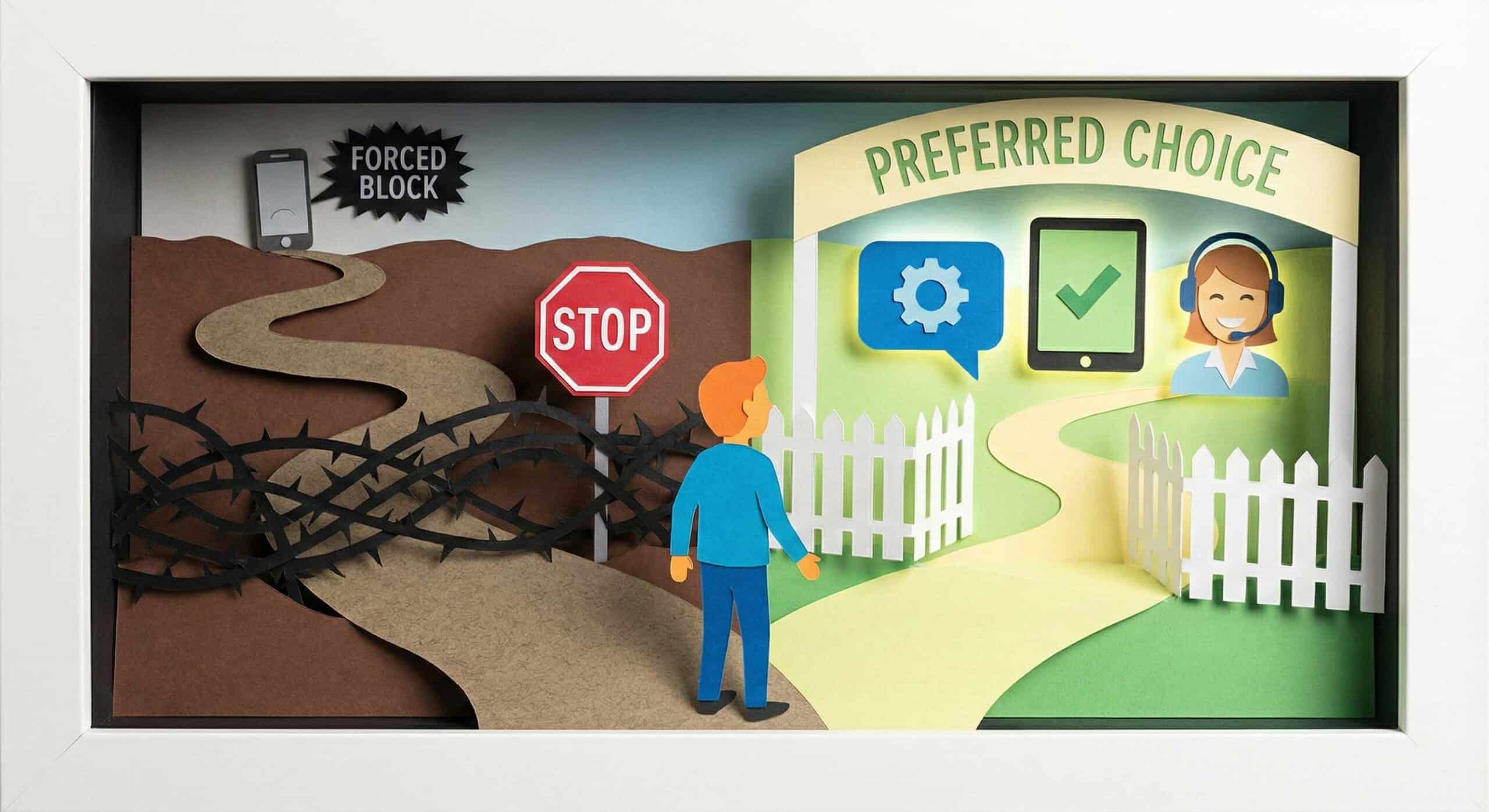
Forced deflection removes choice. It hides human support, restricts options, or uses language that implies the phone is no longer available. This approach may reduce calls temporarily, but it often increases frustration and repeat contact.
Preferred deflection works differently. It presents alternatives transparently and explains their value. Customers feel they are choosing a faster or simpler option, not being pushed away. This sense of control is what determines whether deflection is accepted or rejected.
When Call Deflection Actually Improves the Customer Experience
Customers are more open to deflection when the interaction is low risk and the outcome is predictable. In these cases, alternative channels can genuinely feel more efficient than waiting on hold.
Examples of situations where deflection is often preferred include:
- Simple, repeatable enquiries with clear answers
- Situations where information can be delivered instantly
- Low-risk interactions that do not require reassurance
In these scenarios, deflection reduces effort rather than adding friction.
Designing Deflection Around Customer Intent
Understanding customer intent is central to successful deflection. Customers call for different reasons, and those reasons should determine whether deflection is appropriate. A billing question may suit self-service, while a service complaint may not.
Designing deflection around intent means recognising urgency, complexity, and emotional context. When deflection aligns with why the customer is calling, it feels logical. When it ignores intent, it feels obstructive.
Making Alternative Channels Feel Like a Choice, Not a Barrier
Language and presentation play a major role in how deflection is perceived. Customers are more receptive when alternatives are framed as helpful options rather than instructions. Clear explanations of what the alternative offers build confidence.
Successful deflection strategies typically:
- Explain why the alternative may be faster or easier
- Allow customers to return to human support if needed
- Avoid language that implies restriction or removal of service
This approach preserves trust while still encouraging channel shift.
The Role of Human Support in Successful Deflection
Human support must remain visible for deflection to work. Even if customers never use it, knowing that a person is available provides reassurance. When escalation paths are hidden or unclear, customers are more likely to resist deflection entirely.
Contact centres that integrate human support into deflection strategies create a safety net. Customers are more willing to try alternatives when they know help is available if things do not go as expected.
Measuring Whether Customers Prefer Deflection Options
Deflection success should be measured by customer outcomes, not just call reduction. High deflection rates mean little if customers return repeatedly or express dissatisfaction.
Useful indicators include:
- Completion rates for alternative channels
- Patterns of repeat contact after deflection
- Customer sentiment and feedback
These measures reveal whether deflection is genuinely helpful or simply shifting frustration elsewhere.
Common Mistakes That Undermine Call Deflection
Many deflection strategies fail due to overuse or poor design. Common mistakes include attempting to deflect every call, applying the same approach to all customers, or prioritising internal efficiency over experience.
Another frequent error is failing to review deflection performance. What works today may not work tomorrow as customer expectations change. Without regular assessment, deflection strategies quickly become outdated.
Designing Deflection Strategies That Evolve Over Time
Customer behaviour is not static. As digital confidence grows and service expectations shift, deflection strategies must adapt. Regular review allows organisations to refine when and how deflection is offered.
Effective evolution involves analysing feedback, monitoring behaviour, and adjusting thresholds. Deflection should remain flexible, responding to real customer preferences rather than assumptions.
Why Customer-Preferred Deflection Reduces Long-Term Cost and Friction
When customers accept deflection willingly, operational benefits follow naturally. Fewer repeat contacts, lower complaint volumes, and smoother interactions reduce overall service cost without sacrificing quality.
Preferred deflection reduces friction rather than relocating it. Over time, this leads to more stable contact volumes and stronger customer relationships, supporting both efficiency and trust.
Why Call Deflection Should Be Designed for Preference, Not Avoidance
Call deflection succeeds when it helps customers, not when it avoids them. Designing for preference means respecting intent, offering genuine value, and keeping human support accessible. When customers feel supported, they are more open to alternative channels.
Organisations that approach deflection with this mindset create service experiences that feel modern, responsive, and fair. Those that focus solely on avoidance risk eroding the very trust customer service is meant to build.
FAQs
Q1: What is the difference between call deflection and call avoidance?
A1: Call deflection offers helpful alternatives that customers can choose, while call avoidance restricts access to human support and often increases frustration.
Q2: Do customers actually want self-service options?
A2: Many customers do, provided the option suits their needs and feels faster or easier than calling.
Q3: Can call deflection work for complex enquiries?
A3: Deflection is most effective for simple issues. Complex enquiries should always allow easy escalation to human support.
Q4: How can businesses tell if deflection is harming CX?
A4: Rising repeat contacts, complaints, or negative feedback often indicate deflection is being applied incorrectly.
Q5: Should deflection strategies differ by industry?
A5: Yes. Customer expectations, risk levels, and urgency vary, so deflection must be tailored accordingly.